
Resilient sea
Resilient is a tribute to the people who fight against climate change. The series includes three wearable sculptures, each made from natural materials. Together, they speak about different environmental conflicts. In particular, they denounce how human actions have pushed the planet into a stressed state.
Materials
For this piece, we used Nacra (Pinna Nobilis), Spider Crab (Maja squinado), oysters, and red coral, all sourced from the Mediterranean.
The Numbers Behind the Materials
Indeed, these materials carry real environmental weight. For example, in 2013, the global oyster catch reached 2,317,000 kg. Similarly, in 2009, the global spider crab catch reached 6,700,000 kg. As a result, this piece uses their shells to highlight the scale of extraction from our seas.
Credits
Design: Aloma Lafontana
Photography: Garcia Morales
Makeup & Hair: Estefania Vaqué
Model: Júlia Lara Jiménez

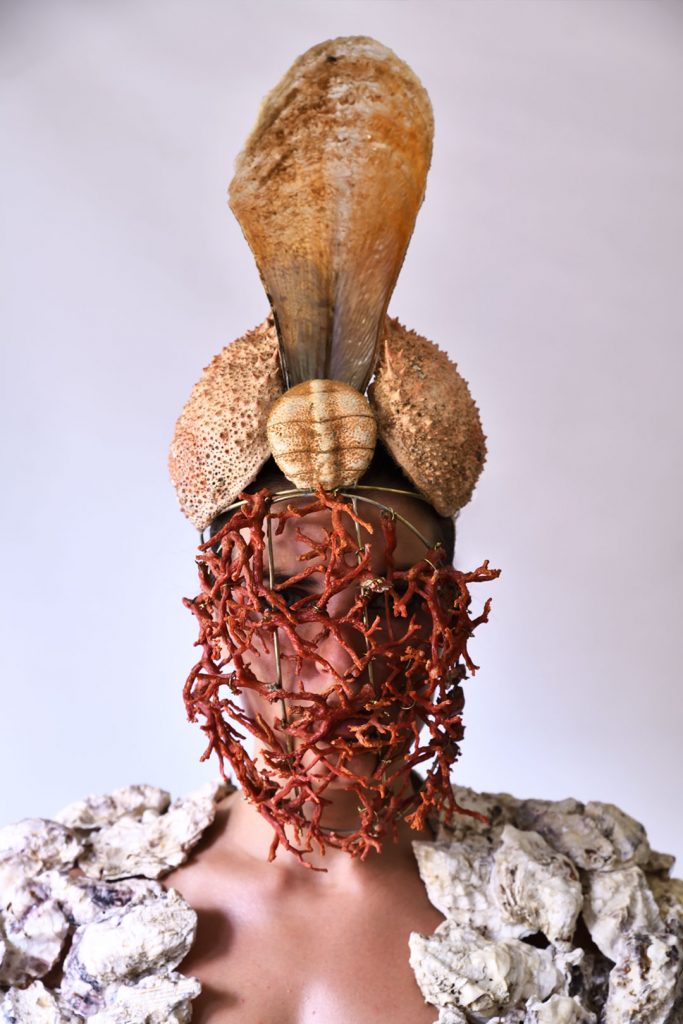
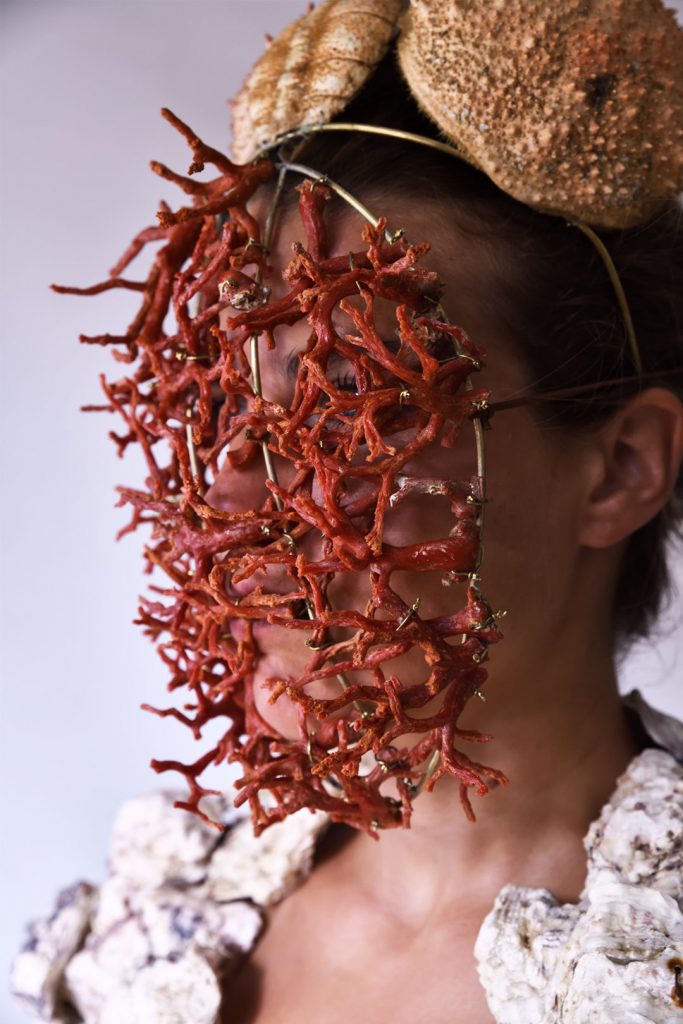
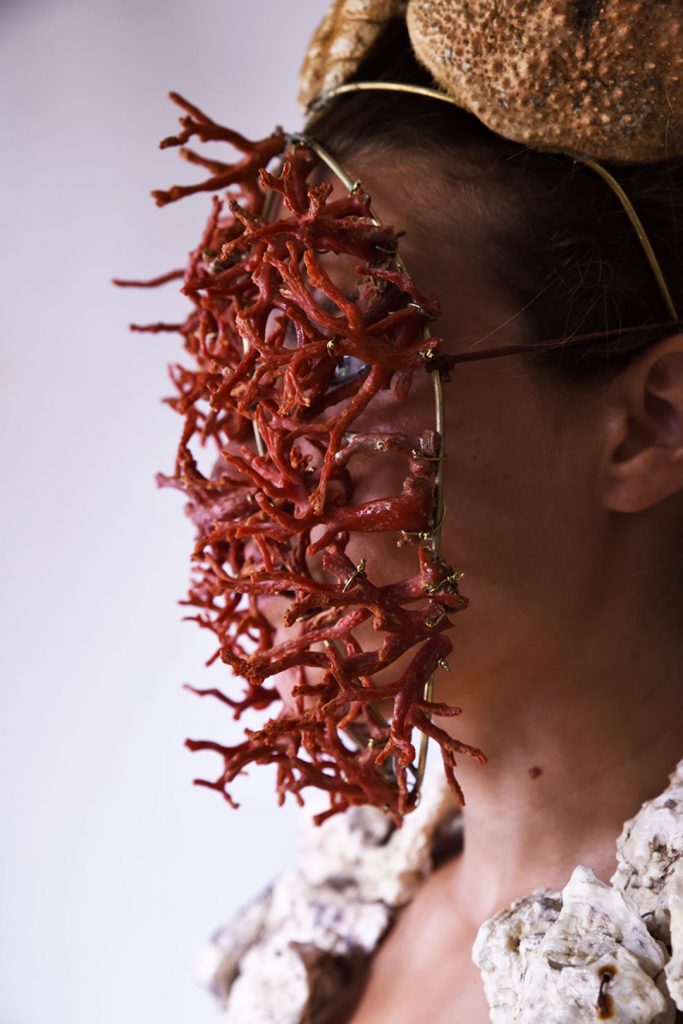
Coral: A Species Under Threat
Coral faces many threats today. If left unchecked, these threats will lead to its extinction. For example, rising sea temperatures and ocean acidification weaken coral colonies. In addition, direct harvesting for jewelry, mining and construction, aquarium decoration, calcium supplements, and medical use all add further pressure.
Despite the efforts of many people to stop this, authorities still grant licenses for coral extraction and commercialization.
The Origin of This Coral
The red coral used in this piece was extracted in the 1970s at Cap de Creus. It comes from the remains collected by a friend’s father — pieces the coral pickers considered too small to sell at the time. Today, coral colonies rarely reach even these small dimensions, since coral grows only 3 to 5 mm per year.
I faced many dilemmas while making this piece, given the coral’s critical situation today. Even so, I chose to use it, precisely to denounce that same situation.
The Nacra: A Species on the Brink
For this piece, I also used a Nacra that belonged to my grandmother. The Nacra is the largest mollusk in the Mediterranean. It has long faced threats from fishing, pollution, and the loss of posidonia meadows, its natural habitat. However, the greatest threat has come recently: a pathogen has killed more than 90% of the Nacra population in just the last three years, pushing the species to the brink of extinction.